
The Poetry House: A Conversation That Continued
In the places that shaped a voice.
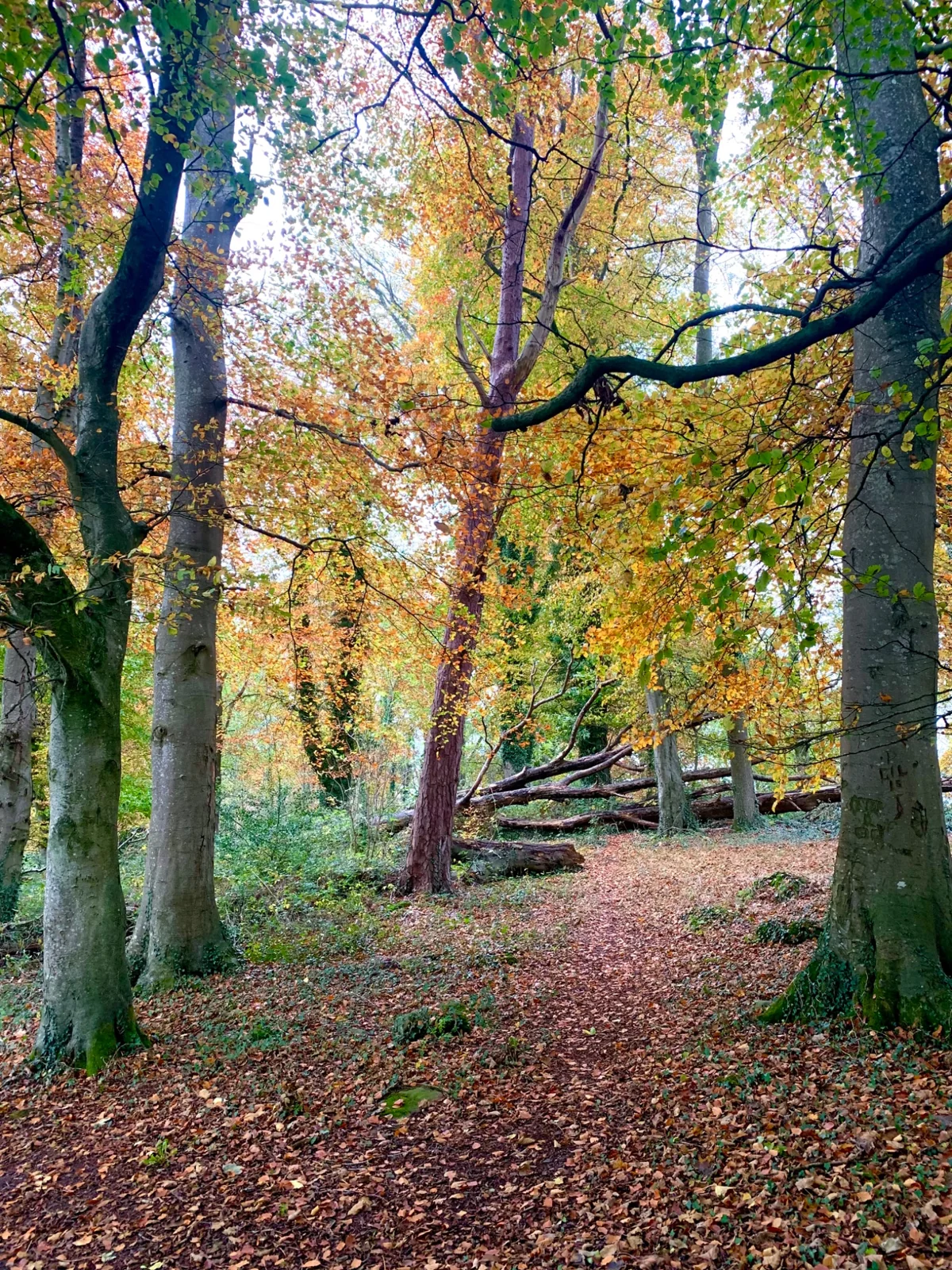
There is something about Bellaghy that keeps bringing conversations back to where they began.
Sometimes it happens in the most ordinary circumstances. A chance meeting in a village shop, an unexpected encounter in a shopping centre, or an evening spent reminiscing with an old friend can bring back people and events that have lain undisturbed in the memory for years.
Bellaghy is not simply a place to which I return. It is where I was born, where I grew up and where I still live, in the same townland that became home to the Heaney family in 1953.
The townlands, place names and family names that find their way into Seamus’s poetry have been part of the familiar vocabulary of my own life.
Perhaps that explains why the conversations of these past thirty years have never felt entirely separate from the landscape in which they began.
Recently, several such conversations have returned me to Seamus Heaney, to Bellaghy Bawn, and to the cultural life of a village that has occupied a significant place in my own story.
They have also reminded me how much of our history survives, not in formal records, but in the recollections of those who were there.
Before the commemorations
I first met Seamus in August 1994 at the William Carleton Summer School.
At the time, proposals were taking shape to establish a cultural presence associated with his life and work at Bellaghy Bawn, the historic building in the heart of his home village.
Our conversation turned to the curious predicament of celebrating a writer who was still very much alive, working and contributing to the world around him.
Seamus approached the subject with characteristic humour and a measure of apprehension. He was wary of being prematurely memorialised, of finding himself transformed into the subject of an exhibition while he still had poems to write and a life to live.
I remember particularly his mischievous amusement at the prospect of literary celebrity being reduced to commemorative souvenirs.
Beneath the humour lay a serious question.
How does a community honour someone whose work has brought it international recognition without losing sight of the living person, or of the place and people who shaped that work?
It was a question that stayed with me.
A building full of voices
I subsequently became the inaugural Venue Manager at Bellaghy Bawn, working there during 1997 and 1998.
The restored building housed an interpretation of Heaney’s life and poetry, including a library and an audiovisual presentation that offered visitors something rather special.
Produced by David Hammond’s Flying Fox Films, Where Are You Now? brought Seamus himself into the landscapes of his home parish.
I remember him moving through the countryside, along the banks of the Moyola and towards the Strand at Lough Beg.
The film belonged to that particular moment in the Bawn’s history. For visitors, it offered the opportunity not merely to read about a celebrated poet, but to hear him reflect upon the places that had entered his imagination.
The years have since altered the building and its exhibitions. Yet the memory of that original presentation remains vivid.
Curiously, the whereabouts of the film’s original recording have now become the subject of a small investigation of their own.
Its title seems rather appropriate.
Where Are You Now?
The things we remember
In August 1998, following the Omagh bombing, I placed a Book of Condolence in the entrance hall at Bellaghy Bawn.
On my final Sunday working there, Seamus arrived unexpectedly.
I remember him sitting quietly with the book, taking time to reflect before writing in it. There was no ceremony attached to the occasion, no audience assembled to witness it.
Only a man, a community in mourning, and a moment of profound simplicity.
The memory has remained with me ever since.
Other recollections are lighter.
I remember Seamus returning to Bellaghy in April 2009 to unveil David Annand’s sculpture The Turfman, and speaking about the close relationship between familiar places, ordinary physical actions and the beginnings of a poet’s imaginative life.
Such moments offered glimpses of the person behind the public reputation: perceptive, humorous, deeply rooted in place and attentive to the smallest details of everyday experience.
The Poetry House
Years later, in 2012, I began developing an idea for a literary festival called The Poetry House, drawing upon the creative energies of friends and collaborators, including the artist Anne McCloy and the writer Bernie McGill.
There were conversations, correspondence and plans for the following year, when Derry would become the inaugural UK City of Culture in 2013.
That designation represented the culmination of years of determination and creative endeavour by the city’s council, the Northern Ireland Tourist Board and an extraordinary community of artists, writers, cultural organisations and local people.
I had been an enthusiastic participant in that wider resurgence, through my work in tourism and cultural development and through the pleasure of introducing visitors to a city increasingly confident in its own stories.
There was a remarkable sense of possibility in Derry during those years, and it was against that background of cultural renewal that our own literary ambitions took shape.
Not everything developed as we had originally envisaged. Cultural projects seldom unfold in precisely the way their creators anticipate, and personal circumstances can alter the most carefully prepared plans.
What I remember most about the correspondence with Seamus during that period is his humanity.
A letter received in January 2013 combined personal concern with a candid explanation of existing commitments, affectionate recognition of mutual friends, and the kind of unexpected humour and literary curiosity that made his company so memorable.
It was a small reminder that the public figure and the private correspondent were not two separate people.
In August of that year, Seamus died.
The conversations and projects of the preceding months suddenly acquired a different significance.
A year later, over the weekend of 30 and 31 August 2014, The Poetry House became part of Bellaghy’s remembrance of its poet.
With the involvement of friends, family, writers and members of the local community, it was an occasion shaped by affection, loss, gratitude and a shared understanding of what Seamus had meant to his home place.
Looking back, I remember less the formalities than the atmosphere.
There was sadness, certainly. But there was also warmth, conversation and the unmistakable feeling that his words continued to belong to the life of the village.
Conversations that continue
Recently, an evening with Anne McCloy brought many of these memories back into focus.
Then, quite by chance, I met Pat Brennan, another longstanding figure in Bellaghy’s cultural and literary life, in a local shop.
We talked at length.
Our conversation travelled back through the early years of Bellaghy Bawn, the Poetry House gathering of 2014, David Hammond’s film, and the changes now taking place as the Bawn prepares for a new life as a place for writers.
What struck me was how differently we remembered the same broad period.
Some episodes familiar to me were entirely new to Pat. He, in turn, brought knowledge and perspectives that I had never encountered.
It was a reminder that no single person carries the whole history of a place.
The story exists between us, in the overlap of memories, documents, conversations and sometimes quite unexpected rediscoveries.
And perhaps this is why I find myself increasingly conscious of the importance of recording these things while we can.
Returning to the landscape
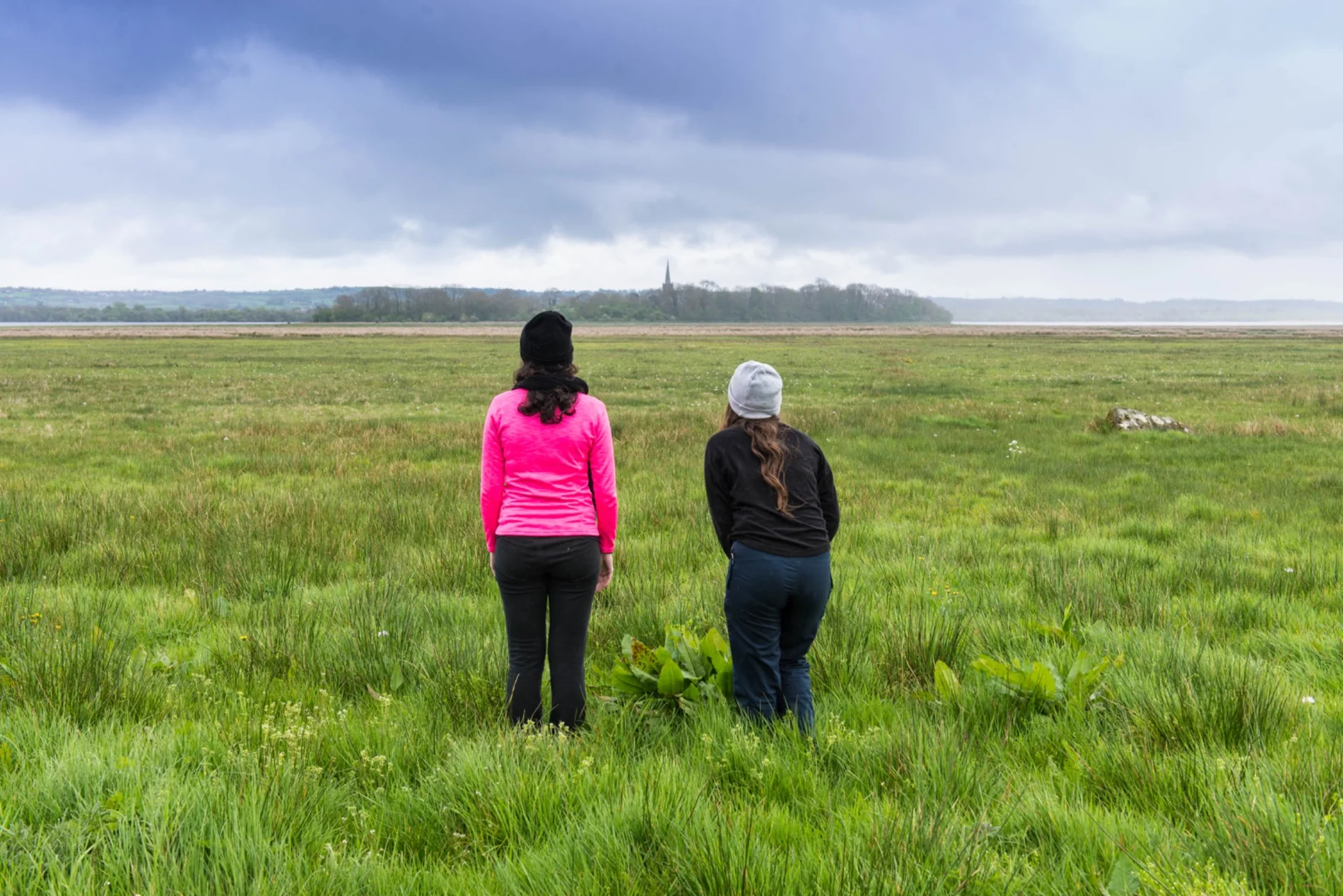
I have walked the Strand at Lough Beg many times, sometimes with visitors, sometimes with friends, and sometimes simply to enjoy the extraordinary openness of the place.
There are days when the distant outline of Church Island seems almost suspended between land, water and sky.
The landscape asks very little of us.
It does not require constant explanation. Nor does it need to be made more picturesque or dramatic than it already is.
It rewards patience, attention and the willingness to listen.
Seamus understood that profoundly.
And perhaps the same is true of the memories we carry. They are not always neatly ordered, and they do not belong to one person alone. They become clearer when shared, questioned and occasionally rediscovered.
What began for me more than thirty years ago as a conversation about a poet and his home place has never entirely ended.
It continues in the friendships, the memories, the buildings, the fields and the ordinary conversations that bring the past unexpectedly into the present.
And sometimes, all it takes is a chance encounter in a village shop.
Fergal Kearney
Founder, Northbound Ireland